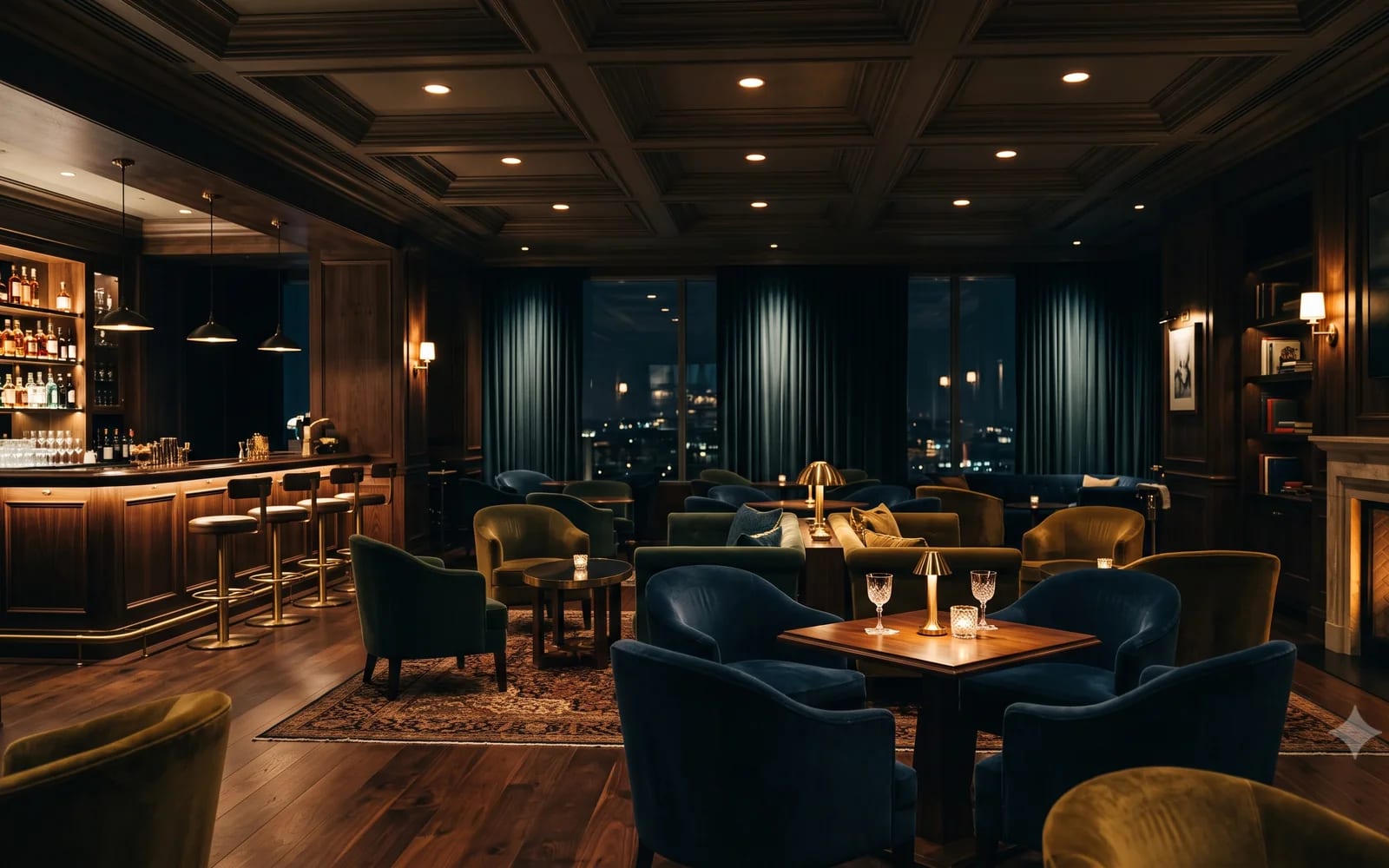
01Hospitality
Lighting that sets the register of a room before anyone reads the menu. Warm, deeply dimmable, and glare-free at eye level.
- 2700–3000K warm white
- CRI 90+ for skin & food tones
- Dim-to-warm on approach
- UGR < 19 at seated eye height
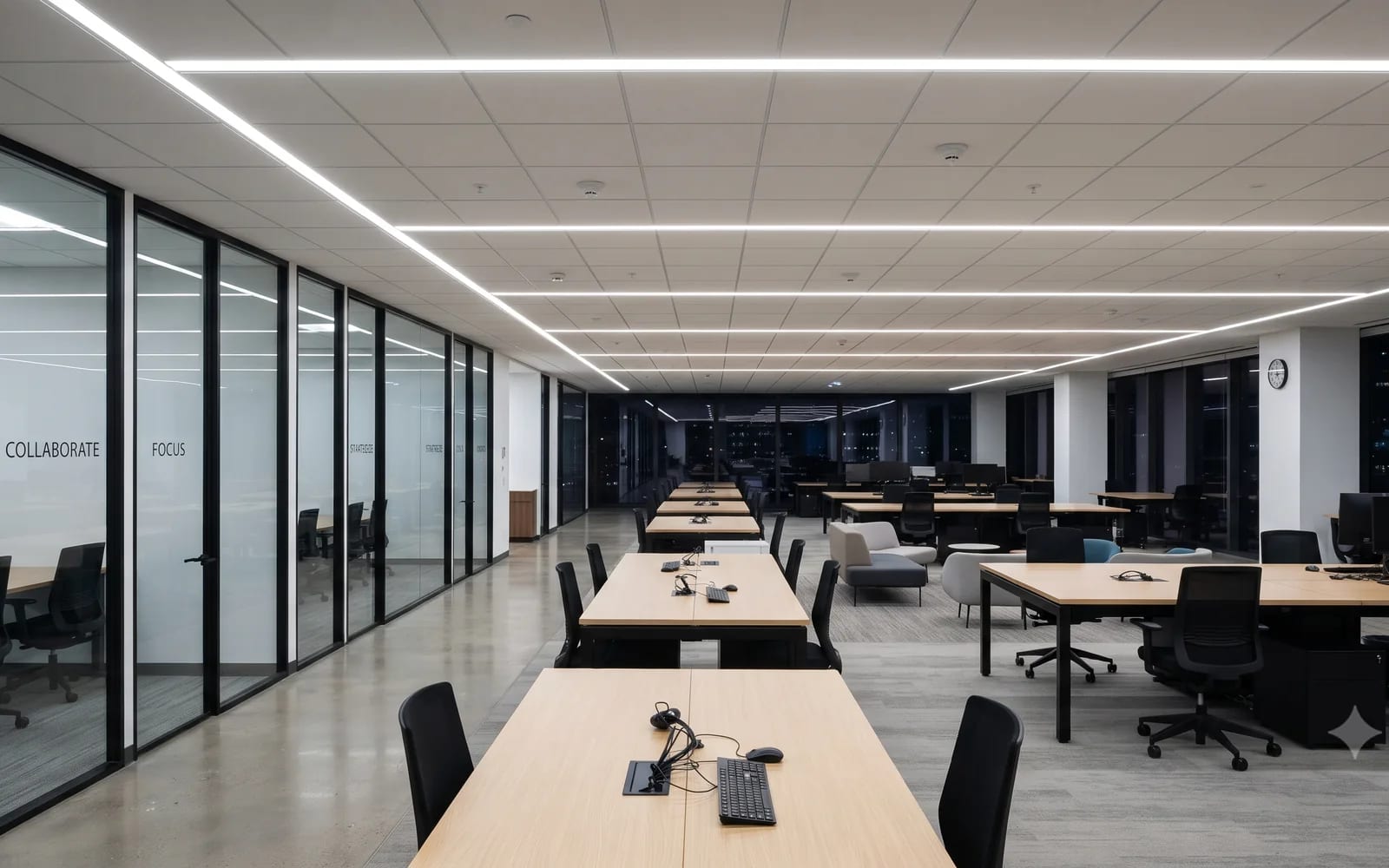
Complete commercial lighting — beauty, measured performance and real support from specification through installation and handover.
01Lighting that sets the register of a room before anyone reads the menu. Warm, deeply dimmable, and glare-free at eye level.
02Comfort over hours, not seconds. Low-glare optics and tunable white that tracks the working day and keeps screens readable.
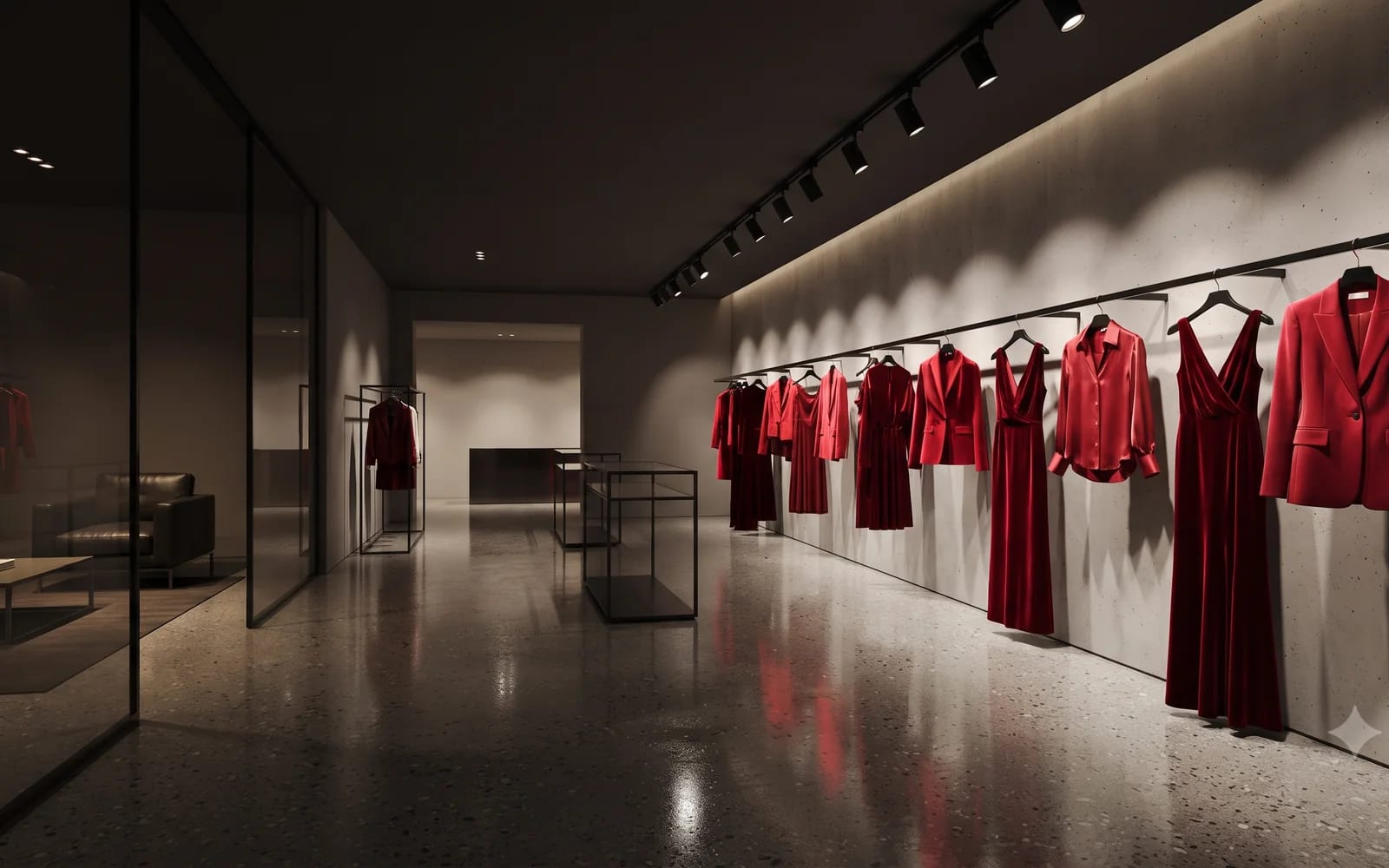
03Merchandise lit the way it was designed to be seen. High-fidelity colour, tight beam control and contrast that pulls the eye.
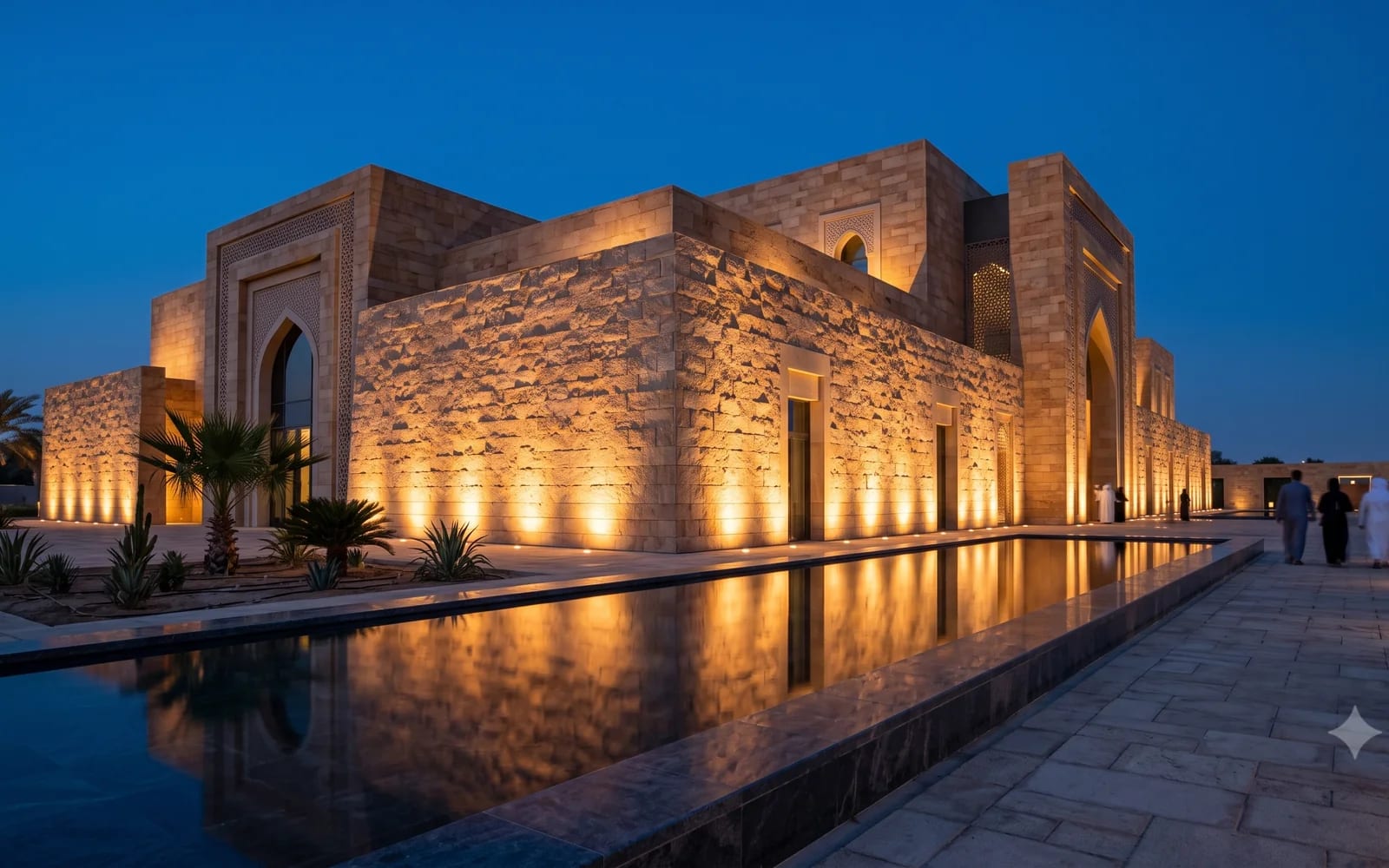
04Sealed, IP-rated housings built for Gulf heat, coastal salt and desert dust — shaping buildings and landscapes after dark.
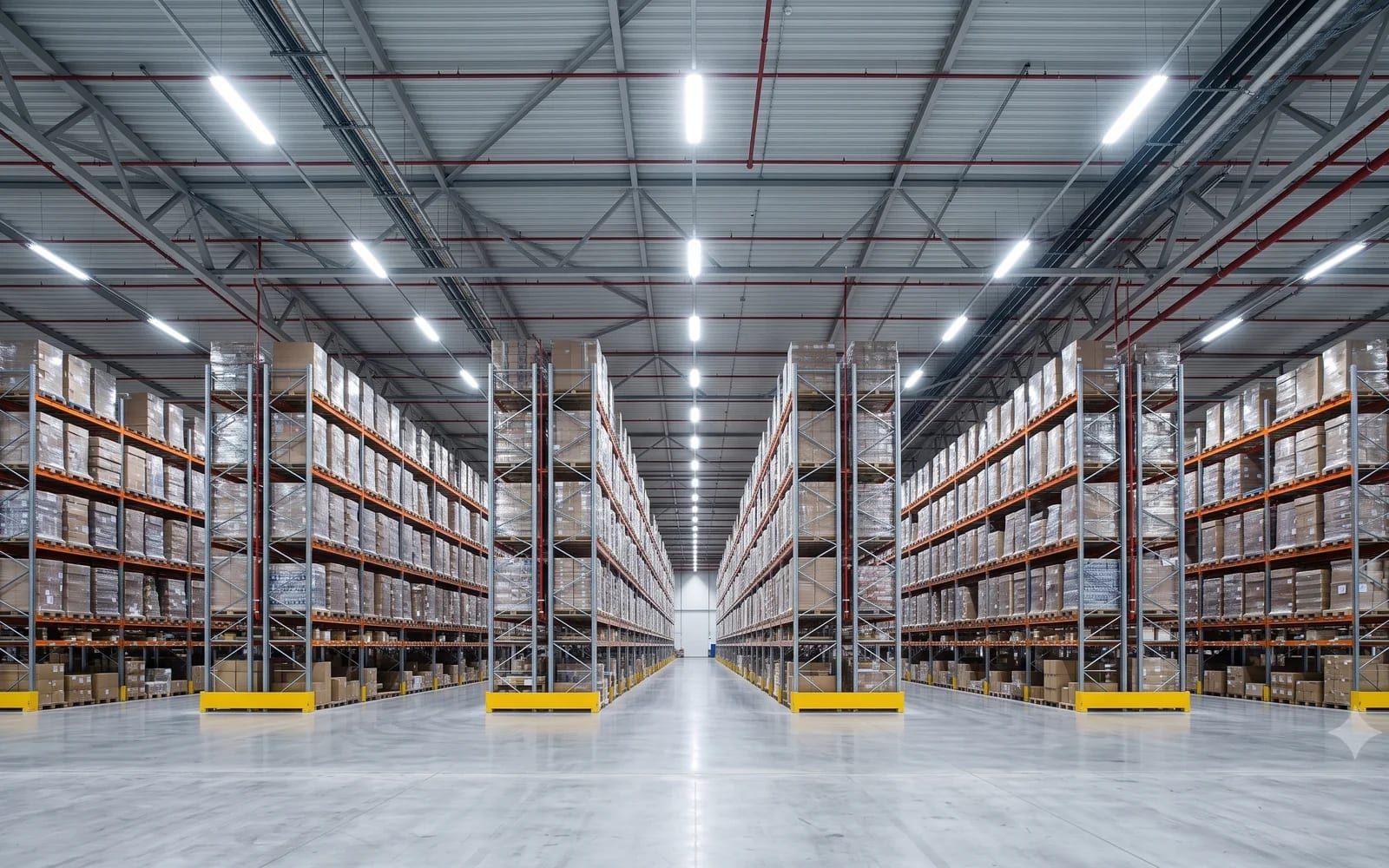
05High-mounting-height output with the efficacy to justify itself on the electricity bill, and the thermals to survive the roof.
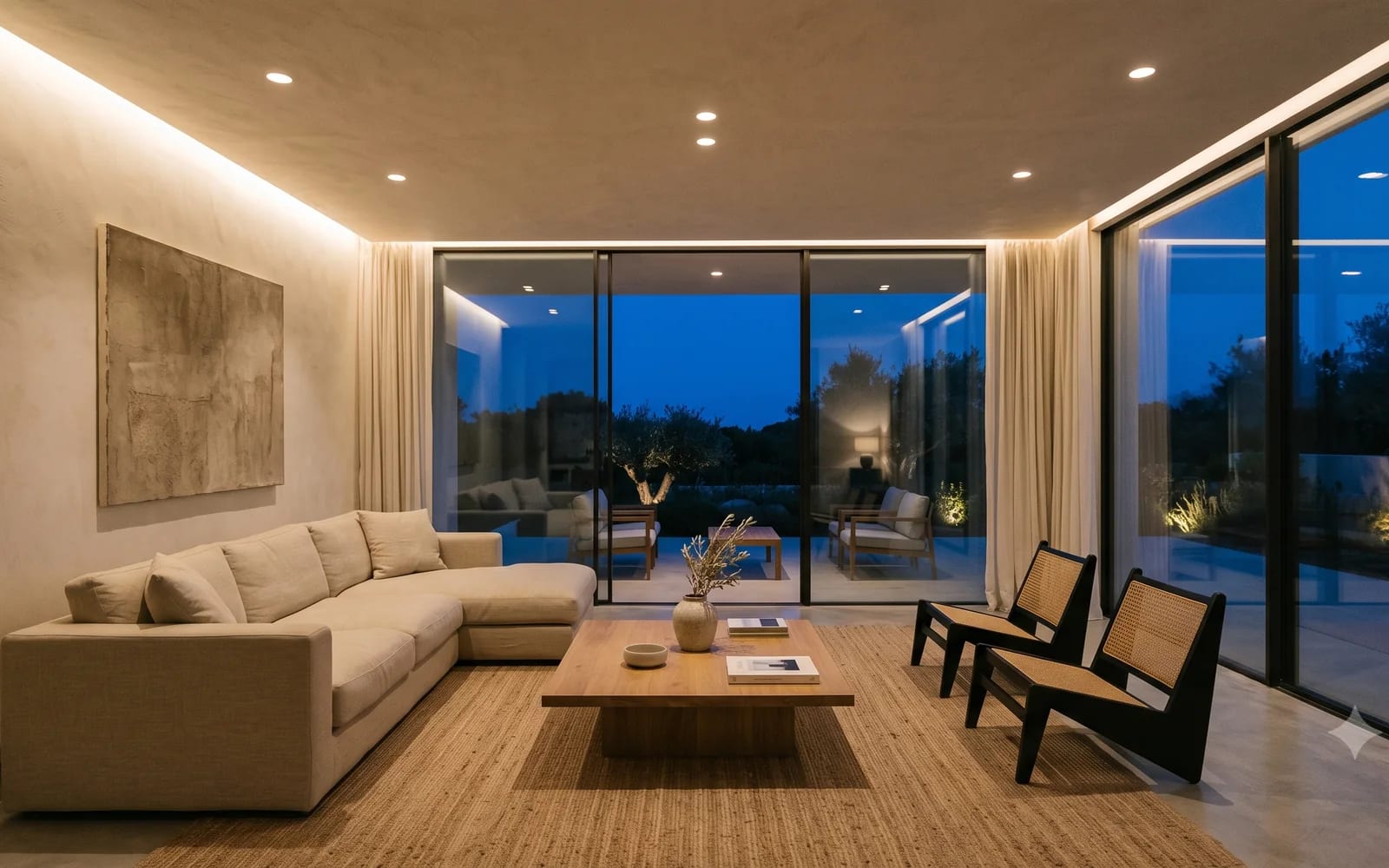
06Architectural discipline at domestic scale — trimless recessed, cove and magnetic track that disappear into the ceiling plane.
CRI scores how faithfully a light source reveals colour against natural daylight, which sits at 100. Anything at 80 or above is acceptable for circulation and street lighting; retail, galleries and hospitality want 90+, and the R9 sub-score matters most because it governs reds — skin, timber, wine, meat.
Measured in Kelvin, CCT describes the appearance of the white — not its brightness. Low numbers read warm and amber, high numbers read cool and blue. Tunable-white fixtures sweep roughly 2700K to 6500K on a single address, letting one luminaire follow the working day instead of committing to one mood.
UGR models the discomfort a luminaire causes at seated eye height in an interior. It is an indoor metric only — it says nothing about exterior fixtures or daylight. Workplaces with screens are specified at UGR under 19; anything above 22 will be felt within an hour and complained about within a week.
Two digits: the first rates solids, the second water. In the Gulf the dust digit does the heavy lifting — IP6x is dust-tight, which matters more than most exterior schedules assume. Add coastal salt and the housing alloy and gasket compound decide the fixture's real service life, not the rating on the datasheet.
Maintained illuminance in lux, per the European workplace-lighting standard your specifier designs to. A useful sanity check before you count fixtures.
Declares the fixture meets EU safety, health and electromagnetic-compatibility directives. The baseline mark for electrical goods and the reference most other schemes build on.
Certifies the product is free of lead, mercury, cadmium and other restricted materials above trace limits — required as a report or declaration for onward IECEE registration.
An internationally recognised test report and certificate issued against IEC standards, so a single set of tests is accepted across member countries instead of re-testing per market.
Mandatory for lighting entering Saudi Arabia since 2019 — combines the IECEE safety recognition with an energy-efficiency label covering lifetime, lumen maintenance, CRI and power factor.
The GCC-wide conformity mark required across Saudi Arabia, Kuwait, the UAE, Qatar, Oman and Bahrain. Regulated products must carry it to be sold anywhere in the Gulf market.
Share the reflected ceiling plan and we will come back with fixture schedules, quantities, photometrics and the certifications your authority having jurisdiction will ask for.